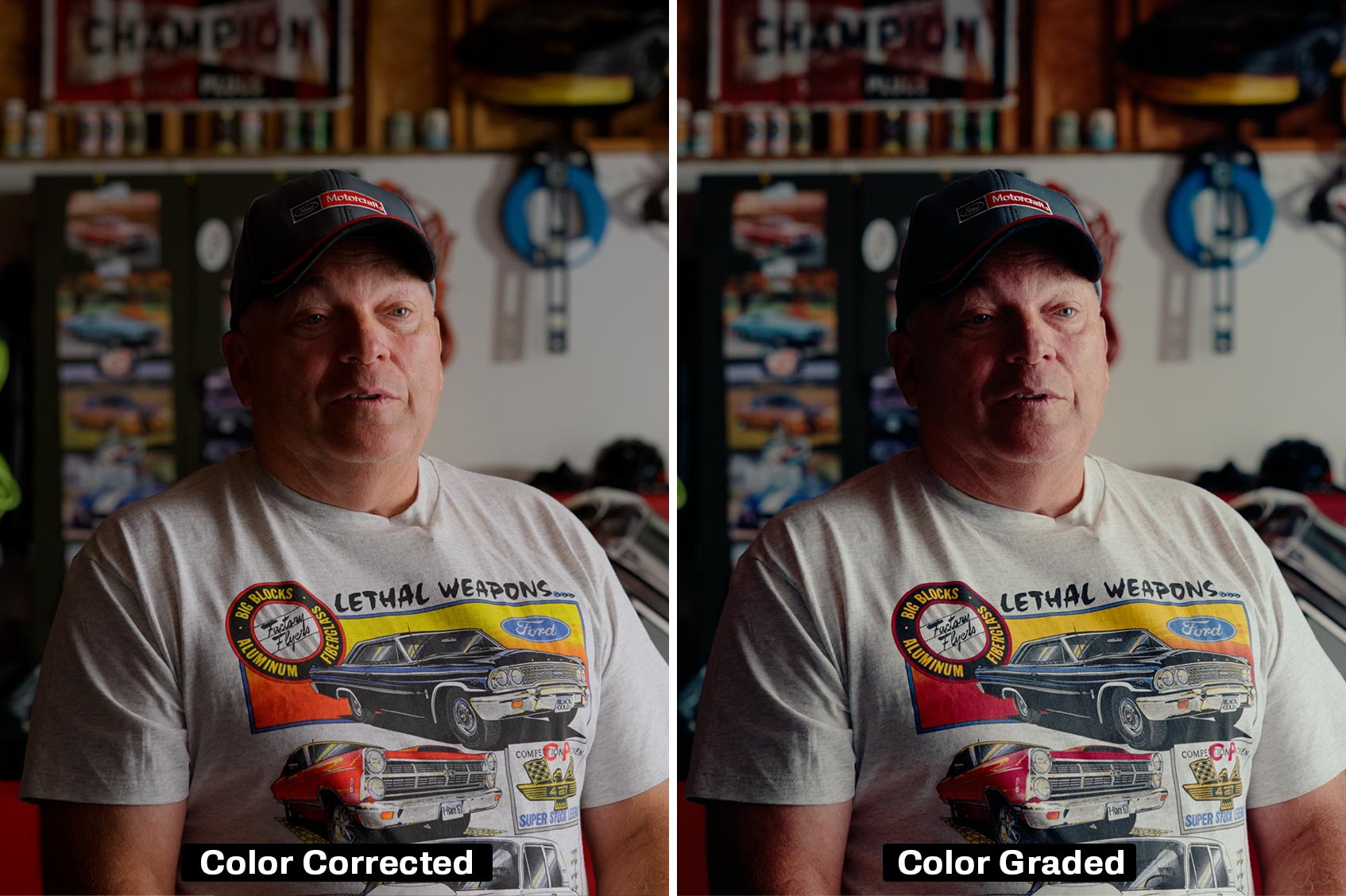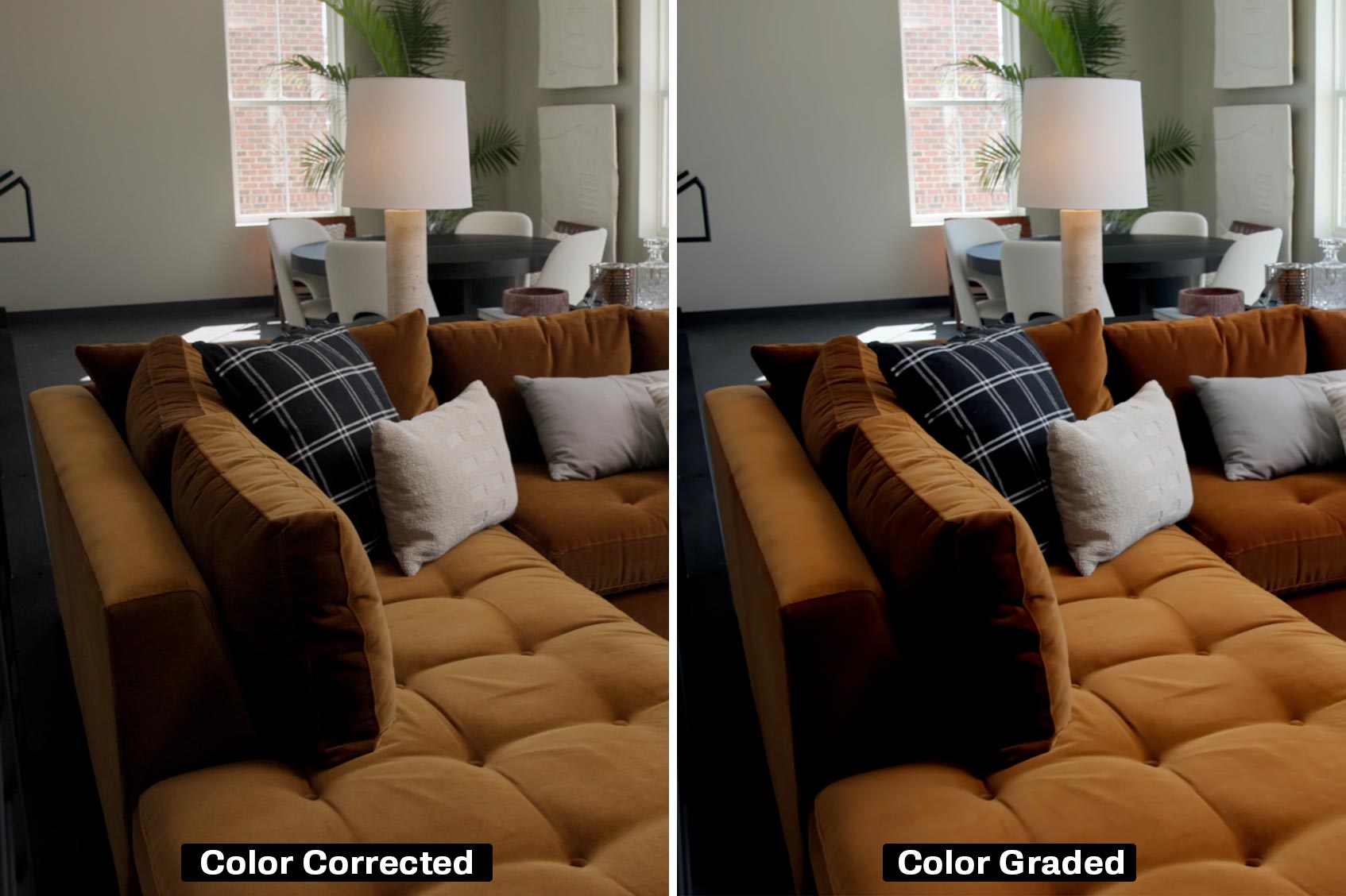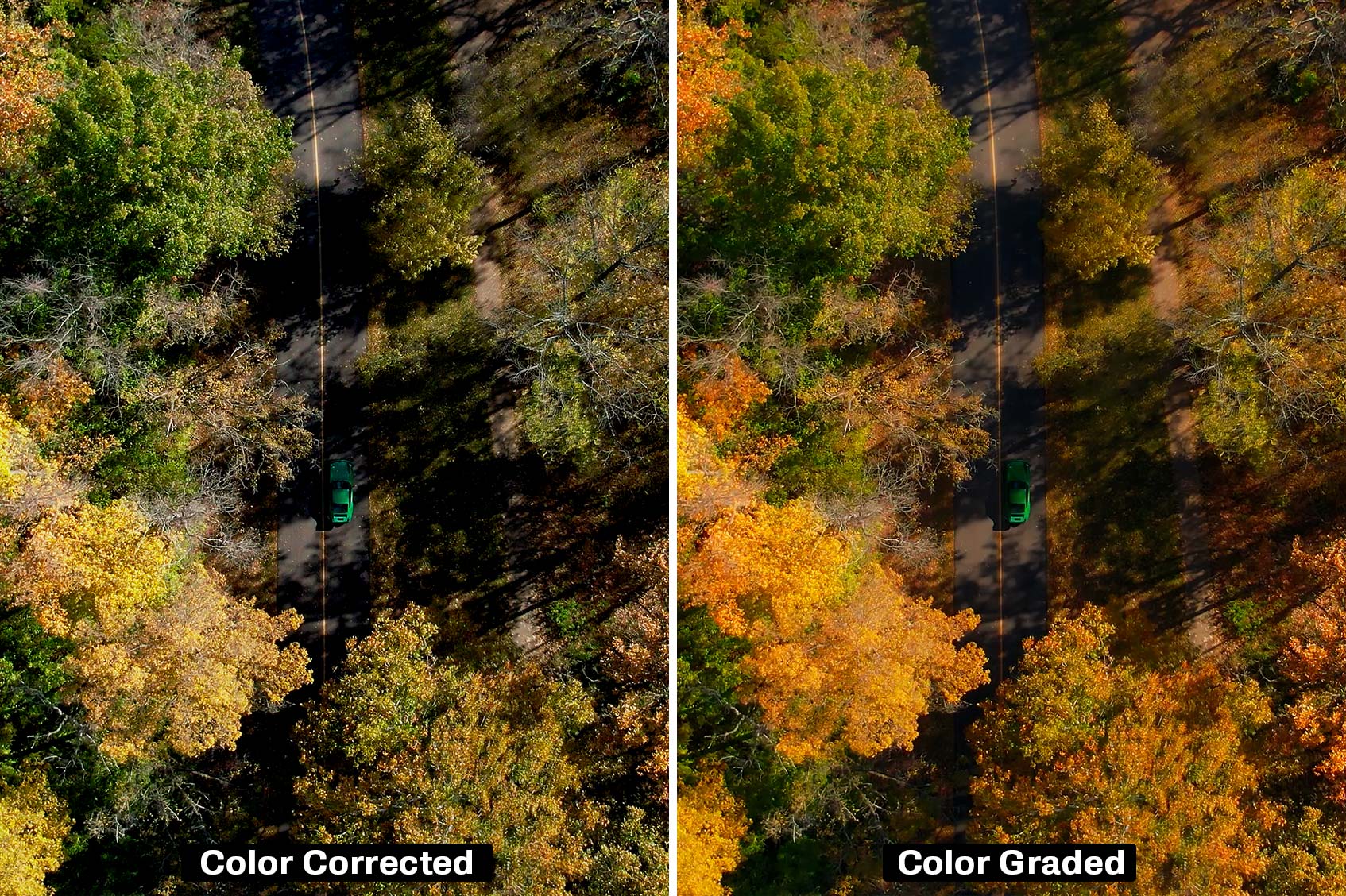
You recently got a proposal from a video production company. In one option, they listed "Color Correction" and then in the next, they listed "Color Grading". What the heck is the difference? Why is one so much more expensive than the other? How do I know what to choose for my project?
To get a better understanding of what's going on behind the scenes, let's drop ourselves right in the middle of a video shoot. A team of people are all operating some fancy hunks of metal that we typically call cameras. These cameras shoot in something called "LOG". This setting captures as much information as possible from the environment so that the colors have the best chance of looking beautiful.
Later, when the post production team goes back to their hunk of metal (computer) and the LOG footage is put into an editing software, it appears to be gray. In order to fix that, you have to put what is called a "LUT" (Look-Up Table) on the footage. This LUT transforms the image from grayscale to full color instantly. You could theoretically stop there, but there'd probably be some issues that you or your customers would struggle to look past. This LUT offers a crucial starting point, but there's still plenty of work to be done.
This is where "Color Correction" comes in. It's exactly what it sounds like: Correcting the colors so that they appear more accurate to real life. When the footage is converted from LOG to color, it looks better, but things are typically a bit askew. Things like skin color, the amount of contrast, and the overall temperature of the image are the usual culprits. Color Correction focuses purely on getting these variables into a place where they look exactly how they did on the day of the shoot, or maybe even better.
The great thing about color correction is that it looks accurate, and it is typically a very cost effective way to get a nice looking image, but there is little to no customization available on this option. For better or worse, the scene will appear as it was shot. If you are looking to help tell the story through colors, like how Hollywood does, you need to keep reading.
Color Grading is all about making an image that portrays an emotion. After color correction has been completed, the image will look accurate, but might be lacking a certain mood. For example, if you are trying to portray that you have a trustworthy company, a bright, vibrant, and clean looking image will help push that narrative. Or, if you're trying to tell a story that connects with your customers, the video will likely be colored a bit more on the blue side to accentuate the low points, and and warmer to highlight the happier moments. Think about how in every box office hit's sad scene, everything gets dark, it starts raining, and the slow music starts to play. The color is just as crucial in achieving this mood as the rest of the ingredients are.
Color Grading is, however, a much more involved process. Typically, it is done by a dedicated "Colorist", whose main job is turning the footage from a fairly normal looking scene, into something that helps propel the narrative being told. This is highly specialized skill, which helps to explain the added costs associated with it. There will also need to be a bit of extra time built in for a Colorist to get everything right, and fix any revisions you may have (like making things less cold, more vibrant, or even "more vintage"). Ultimately, the options are nearly unlimited in the amount of customization you have at your disposal.
While the decision is always yours to make, and no one should try to persuade you one way or the other, there are advantages and disadvantages to each option.
As mentioned earlier, Color Correction is typically a quick, cost effective way to complete a video. It lacks the customization and storytelling capabilities of Color Grading, but it is a good way to keep things simple and fast. Colors will be accurate, but not stylized. This is typically a good option if your budget is on the lower side, if you're making internal videos (like training), or pumping out tons of content and you'd like to keep it looking more relatable.
On the other end, Color Grading is almost always more expensive, and needs a longer timeline to get it just right, but it can instantly add an additional level of credibility and trustworthiness to your business. Color Grading cannot fix everything, but if the video was shot well, it can make the final product seem much higher quality, garnering instant street cred from any potential customer or sponsor who sees it. If you're telling a powerful story, or building a flagship video for your brand, it is strongly recommended that you invest in the Color Grade, as it will help portray the emotions and connect with your customers on a deeper level. Even if a person can't tell exactly what made the video so great, they can feel that everything was right. As Walt Disney said, "People can feel perfection".
If you'd like to talk about building extra trust with your customers, please contact us today.